What Is Biofloc Technology and How Does It Work?
Biofloc technology turns fish waste into protein-rich microbial floc. Learn how it works, the C:N ratio, bacteria, costs and which fish suit it.
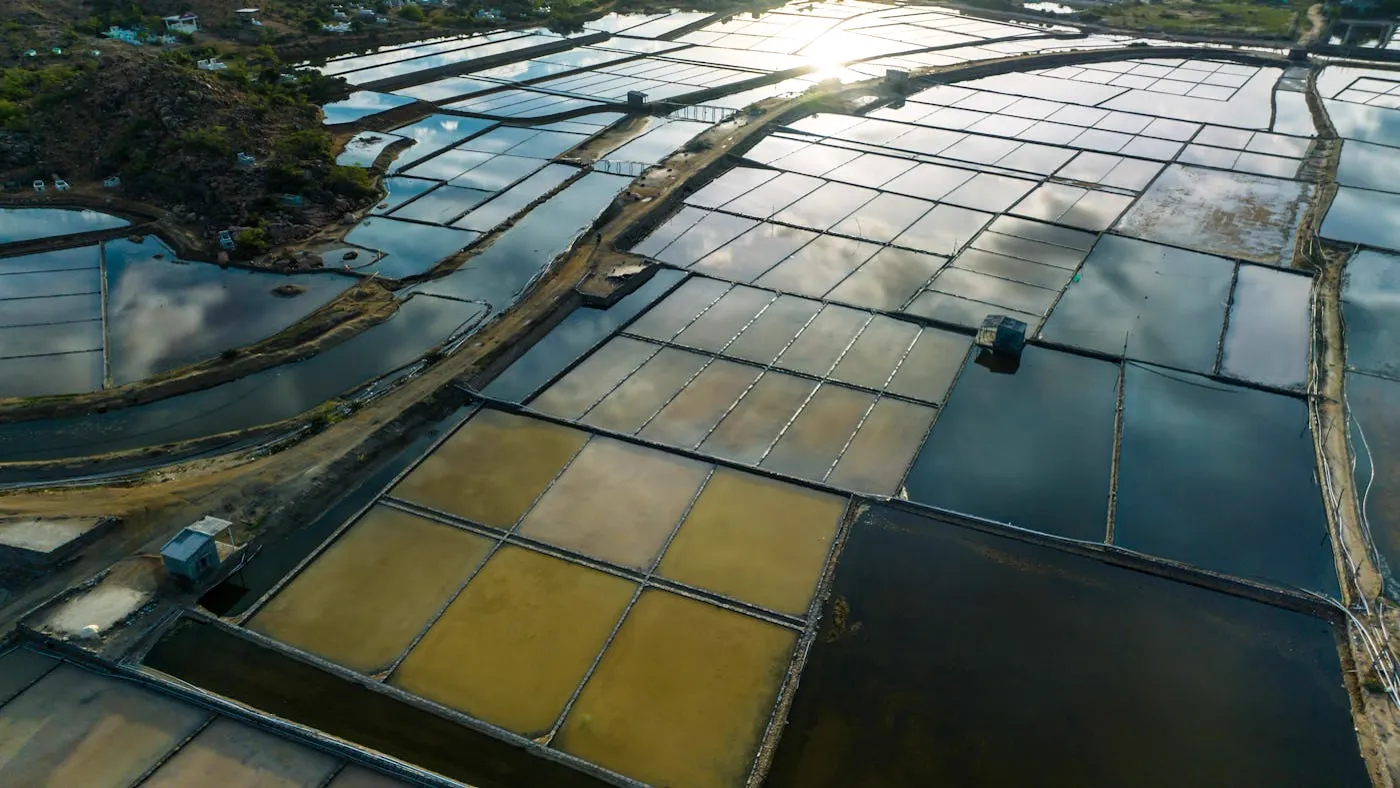
Biofloc technology (BFT) is a way of farming fish and shrimp that turns their own waste into food. Instead of flushing out dirty water, you grow a dense community of bacteria and microbes inside the tank. Those microbes consume the ammonia from fish waste and uneaten feed, and clump together into small nutritious particles — the “bioflocs” — that the fish then eat. The result is a near-zero-water-exchange system that recycles nutrients in place.
That single idea changes the economics of a farm: less water, lower feed bills, and higher stocking density on the same footprint. It is why biofloc has spread from research ponds in Israel and the US to commercial tilapia and shrimp operations across Asia, Africa and Latin America.
The core idea: feeding bacteria, not just fish
In any intensive tank, fish excrete ammonia. Ammonia is toxic, and in a normal pond you dilute it by exchanging water. Biofloc takes a different route.
By adding a cheap carbon source — molasses, wheat flour, cassava — you raise the carbon-to-nitrogen (C:N) ratio of the water to roughly 15–20:1. At that ratio, heterotrophic bacteria multiply fast and pull ammonia straight out of the water to build their own cells. Those bacteria, along with algae, protozoa and organic particles, aggregate into suspended flocs. Two useful things happen at once: the toxic ammonia is removed, and the floc itself becomes a 25–50% protein feed that fish graze on between meals.
This is the mechanism Dr. Yoram Avnimelech described in his foundational work on biofloc (Avnimelech, 1999; Biofloc Technology: A Practical Guide Book, 2009), and it remains the reference model for how the system balances nitrogen.
How a biofloc system works, step by step
- Stock the tank — usually a round PVC tarpaulin tank or a lined pond, sized to the batch.
- Start aeration and never stop it. Floc only stays suspended and oxygenated while the water is moving. Dissolved oxygen must stay above ~4–5 mg/L at all times.
- Feed the fish, then feed the bacteria. Each feeding adds nitrogen; you balance it with a carbon dose to hold the C:N ratio.
- Let the floc develop. Over the first 2–4 weeks a brown, slightly cloudy floc builds up. Floc density is checked with an Imhoff (settling) cone — a working range is about 200–500 mL/L of settled solids.
- Manage the solids. Too much floc starves the water of oxygen and clogs gills, so excess is settled out or filtered.
- Harvest at higher density than a conventional pond would allow, with little or no water discharged along the way.
What you need to run it
Biofloc is forgiving on water but unforgiving on power and oxygen. The equipment list is short but non-negotiable:
- Continuous aeration — the heart of the system. Most farms run a root blower feeding a grid of nano aeration tubes along the tank floor, which both oxygenate and keep the floc in suspension.
- A tank that holds clean water — typically a PVC tarpaulin fish tank (650–750 GSM is the common spec buyers ask for) or an HDPE-lined pond.
- Probiotics to steer the microbial community toward the bacteria you want — see aquaculture probiotics.
- Water testing — at minimum dissolved oxygen and pH, ideally a multi-parameter water quality meter, because in biofloc the water is the filter.
- Backup power. A few hours without aeration can kill a whole batch, so a standby generator is insurance, not a luxury.
Which fish suit biofloc?
Biofloc works best with species that tolerate solids and can physically eat the floc:
- Tilapia — the classic biofloc fish; hardy, eats floc readily, fast-growing in warm water.
- Whiteleg shrimp (Vannamei) — the largest commercial use of biofloc worldwide.
- African catfish / Pangasius — robust and well suited to high-density tanks.
Cold-water or oxygen-sensitive species are a poorer fit, and in cold climates you also have to heat the water to keep tilapia growing — see our note on aquaculture water heaters.
Advantages — and the honest trade-offs
Why farmers move to biofloc:
- Water: exchange is cut by 80–90% versus flow-through ponds — decisive where water is scarce or expensive.
- Feed: floc protein can replace 10–30% of formulated feed, the biggest running cost on most farms.
- Density & biosecurity: higher kg/m³ and a closed system that keeps pathogens out.
What it asks in return:
- Power dependence. No aeration, no biofloc. This is the number-one cause of crop loss.
- Solids management. Floc has to be kept in a window; too thick and it suffocates the stock.
- A learning curve. The first cycle is about reading the water — C:N ratio, settling volume, oxygen — not just feeding fish.
This is the experience we pass on to our own customers. SIGMA has supplied biofloc tanks and systems to Japfa (one of Asia’s largest aquaculture groups, a repeat buyer of our biofloc tilapia tanks) and to Tropo Farms in Ghana, alongside projects shipped to Mozambique and Bangladesh. The pattern is always the same: the farms that succeed are the ones that respect the aeration and the solids, from day one.
Is biofloc profitable?
It can be, and the math is mostly about feed and water. On a tilapia or shrimp operation where feed is 50–60% of cost and water is limited, the feed saving from floc protein plus the higher density per tank is what turns the numbers positive. The upfront cost is in tanks, blowers and aeration — equipment that lasts many cycles. Farms that skimp on aeration to cut that cost are the ones that lose batches.
If you are weighing biofloc against a recirculating system, we compare the two head-to-head in Biofloc vs RAS: Cost, ROI and How to Choose.
Frequently asked questions
What is biofloc?
Bioflocs are macroaggregates (flocs) of bacteria, algae, protozoa and particulate organic matter such as uneaten food and faeces, held together by a loose matrix of mucus secreted by the bacteria.
How does biofloc technology improve water quality?
Adding a cheap, locally available carbon source such as wheat flour manipulates the C/N ratio to stimulate heterotrophic bacteria, which assimilate ammonia into single-cell microbial protein. In green-water systems, phytoplankton also help by taking up toxic ammonia-nitrogen.
Does biofloc recycle feed protein?
Yes — only 20–25% of fed protein is retained by fish in intensive systems; the microbial protein (biofloc) is then eaten by the fish, recycling protein that would otherwise be excreted as ammonia and waste.
Why is constant mixing essential in a biofloc system?
Intensive turbulent mixing keeps the solids suspended at all times. Without it, bioflocs settle into dense piles that rapidly consume oxygen and turn anaerobic, releasing hydrogen sulfide, methane and ammonia that are toxic to shrimp and fish.
What is biofloc technology in aquaculture and how does the system work?
Biofloc technology in aquaculture is a water management approach where a dense community of bacteria, microalgae and protozoa is cultivated in suspension inside the culture tank. This biofloc farming system converts toxic ammonia directly into microbial biomass that fish and shrimp can eat, drastically reducing the need for water exchange. A biofloc culture system is typically run in a lined tank or tarpaulin pond with high aeration — a roots blower feeding bottom nano diffusers — to keep the floc particles suspended and oxygenate the dense biomass.
What does a biofloc fish farming operation cost?
Biofloc fish farming cost breaks down into four main components: tank (a PVC tarpaulin or galvanized sheet tank), aeration equipment (roots blower and nano diffuser tubes), probiotic and feed inputs, and fingerlings/post-larvae. A small pilot system of Ø 5 m tanks typically costs far less than an equivalent concrete pond to set up, because tarpaulin tanks install in hours on flat ground. Ongoing biofloc fish farming cost is driven by aeration electricity, feed (typically at 28–32% protein) and probiotic dosing. For a more detailed cost breakdown matched to your scale, species and location, contact SIGMA's aquaculture team.
Put this into practice on your farm
Tell our engineers your species, target density and site — we will size the system and reply within one business day.
More to explore
- Trichodina in Tilapia: Symptoms, Diagnosis & Control
- White Spot Disease in Shrimp (WSSV): Prevention & Biosecurity
- Bacterial & Fungal Diseases in Sturgeon: Symptoms & Control
- Columnaris and Parasitic Diseases in Catfish
- Water Quality & Fish Disease: Why Most Outbreaks Start in the Water
Building a system from what you read here? Ask our engineers for a tailored plan →