Monogenean Parasites in Fish: Gyrodactylus and Dactylogyrus
Monogenea (gyrodactylus, dactylogyrus) are skin and gill flukes that kill tilapia. Learn how to diagnose them under a scope and control them in the tank.
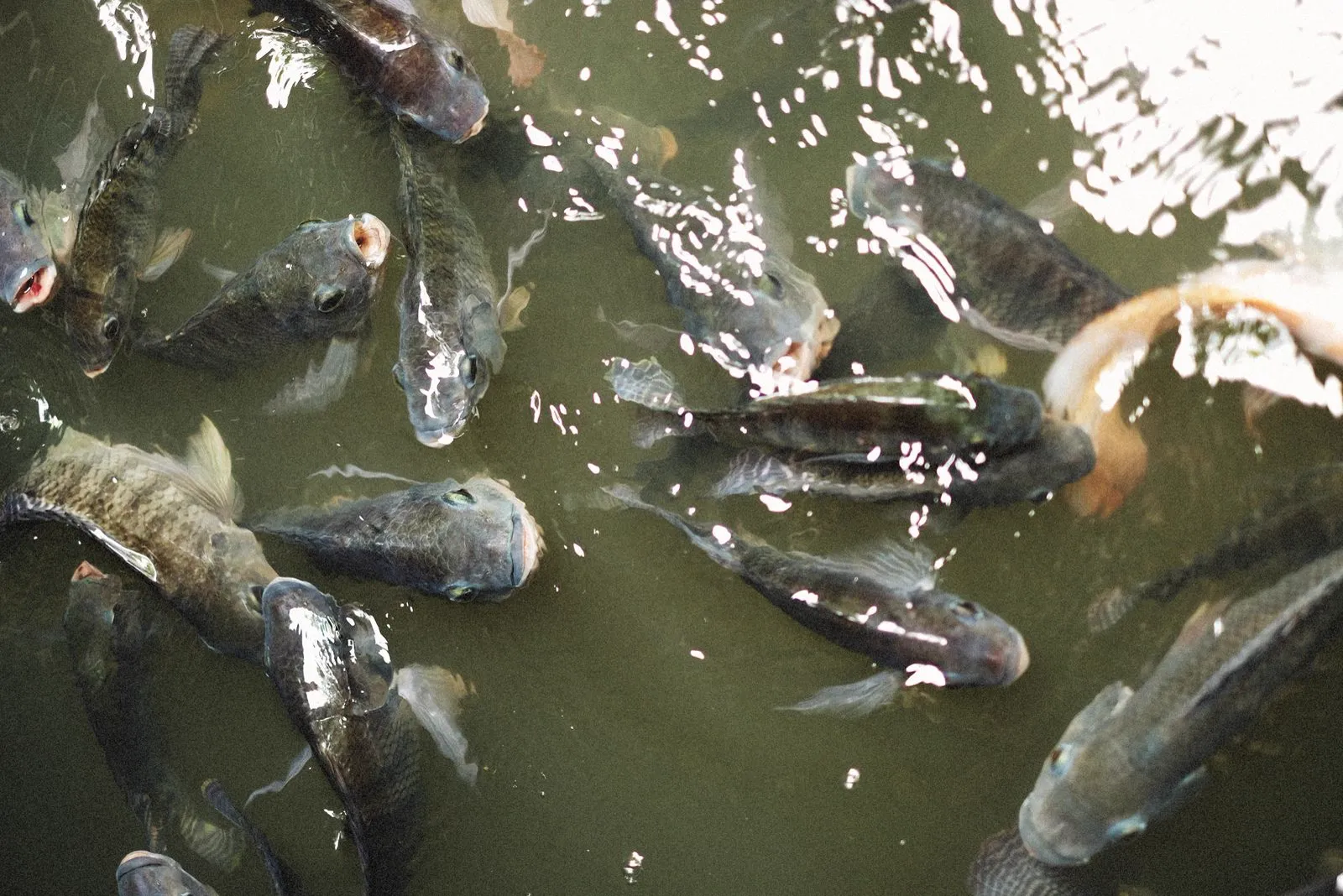
Monogenea are flatworm parasites — monogenean flukes — that live on the skin, fins and gills of fish and hold on with a hooked disc at their tail end. In farmed tilapia the two that matter are Gyrodactylus, the skin fluke, and Dactylogyrus, the gill fluke. Both are small (around 0.3–2 mm), both have a direct life cycle with no intermediate host, and both can go from a few worms to a tank-wide outbreak in under two weeks. That speed is what makes them dangerous.
We see them most often in the same conditions that grow good tilapia badly: warm water, high stocking density, and a tank where the waste load has crept up. The parasite was always there at low numbers; the water quality is what let it explode.
What monogeneans are
A monogenean is a single-host parasite. The worm hatches, finds a fish, feeds on skin and gill tissue, and reproduces — all on one host, with no snail or copepod stage in between. That “mono” (one-host) life cycle is where the name comes from, and it is also why they spread so fast in a closed tank: every worm that drops off or every egg that hatches lands straight back on another fish in the same water.
At the tail end each worm carries an opisthaptor — a muscular disc armed with hooks and, in Dactylogyrus, a pair of large central anchors. Those hooks dig into the epithelium, and the worm grazes on mucus, skin cells and, on the gills, blood. The physical damage opens the door to the bacteria and fungi that usually finish the fish off.
Gyrodactylus vs Dactylogyrus: how to tell them apart
These two get lumped together as “flukes,” but they behave differently, and the difference changes how you treat them. Under the microscope it is straightforward:
| Gyrodactylus (skin fluke) | Dactylogyrus (gill fluke) | |
|---|---|---|
| Where it lives | Skin, fins, body surface | Gills |
| Eyespots | None | Four eyespots at the head |
| Reproduction | Viviparous — live birth | Oviparous — lays eggs |
| Anchors on the haptor | Small, no central anchors visible | Two large central anchors + 7 pairs of marginal hooks |
The reproduction difference is the one that bites you in practice.
Gyrodactylus is viviparous and does something remarkable: a newborn worm is already carrying a fully formed embryo, and inside that embryo a third generation is forming — serial polyembryony. One worm can hold up to three daughter generations, and a single founder can produce a population of more than 2,000 worms in about 30 days. There is no egg stage, which means a good bath treatment that kills the worms on the fish can clear a Gyrodactylus problem in one or two passes.
Dactylogyrus is oviparous. It drops eggs into the water that hatch in roughly four days at 20 °C, and the ciliated larva then has only 6–8 hours to find a host before it dies. The catch: the eggs are tough and most chemical treatments do not kill them. So with gill flukes you have to repeat the treatment — typically weekly — to catch each new wave of larvae as it hatches, until the egg bank in the tank is exhausted.
Symptoms: what an infected tilapia looks like
The early signs are behavioural, before you can see anything on the fish:
- Flashing and rubbing — fish scrape their sides against the tank wall or bottom, trying to dislodge the worms.
- Hanging at the surface, gasping, piping at the inlet — this points to the gills, i.e. Dactylogyrus. Heavy gill-fluke loads damage the gill epithelium enough to wreck respiration, and fish suffocate even in well-oxygenated water.
- Excess mucus, pale or grey patches on the skin, frayed fins, clamped fins — more typical of Gyrodactylus on the body surface.
- Lethargy and off-feed, then secondary infections — reddened sores, columnaris, Saprolegnia fungus — moving in through the damaged skin and gills.
Mortality in a heavy outbreak can be high and fast, especially in fry and fingerlings, which have the least gill reserve to spare.
Diagnosis: you have to look down a microscope
There is no way to confirm monogeneans from behaviour alone — flashing and gasping look the same as Trichodina, Ichthyophthirius (“ich”) or simple low oxygen. The only definite diagnosis is a wet mount under the microscope.
Here is the routine we run with farms:
- Take a fresh sample. A gentle skin scrape with a coverslip for Gyrodactylus; a clip of the gill filaments for Dactylogyrus. Use a fish that is sick but still alive — parasites leave a dead host fast.
- Wet mount, low power (40–100×). Monogeneans are big enough to see moving — a worm-like body inching along with a leech-like motion, anchored at the back end.
- Confirm the genus. Count eyespots and look at the haptor: four eyespots and two large anchors = Dactylogyrus; no eyespots, live young sometimes visible inside the body = Gyrodactylus.
Before you reach for a chemical, measure the water. Ammonia, nitrite, pH, temperature and dissolved oxygen tell you why the outbreak happened and whether the fish can even survive a treatment. A multi-parameter water tester gives you all of that in one reading; treating sick fish blind, on top of bad water, is how you turn an outbreak into a wipeout.
Treatment and control
Two jobs at once: kill the worms, and fix the conditions that let them bloom. Skip the second and they come straight back.
Knocking down the parasite
- Salt (NaCl) bath — the cheapest first line and well tolerated by tilapia. It works better on Gyrodactylus than on the eggs of Dactylogyrus, so it usually needs repeating.
- Formalin — a standard treatment for both; Dactylogyrus has been cleared with a single bath of around 250 ppm for 35–40 minutes, but formalin strips oxygen from the water, so run heavy aeration throughout and never use it on already-gasping fish.
- Praziquantel — the targeted drug for monogeneans, effective and gentle where it is available and affordable.
- Mebendazole / flubendazole and potassium permanganate are also used. Whatever you choose, dose against the fish’s weakest organ — the gills — and watch them through the bath.
- Repeat for gill flukes. Because Dactylogyrus eggs survive treatment, plan on weekly repeats to break the cycle as new larvae hatch. One dose is never enough for an egg-layer.
Fixing the water — this is the real cure
The outbreak is a symptom of crowding and dirty water. Three levers:
- Cut the waste load and clean the water. Bring ammonia and nitrite down, take out the solids the worms and their secondary bacteria feed on. On a recirculating tilapia system that means real mechanical filtration — an automatic rotary drum filter pulling solids out continuously rather than letting them rot in the tank.
- Keep oxygen high. Fluke-damaged gills cannot extract oxygen efficiently, so the fish need more in the water, not less — especially during and after a formalin bath. A root blower on the aeration grid, or a dissolved oxygen cone on intensive systems, keeps DO up where the fish can use it.
- Reduce the reinfection pressure. A UV filter on the recirculation loop kills free-swimming Dactylogyrus larvae in the water column before they reach a host — exactly the window (those 6–8 hours) when the parasite is vulnerable. Backing the fish up with probiotics for aquaculture and steady water chemistry helps the damaged skin and gills heal and crowds out the opportunistic bacteria waiting to move in.
This is the order we give our own customers: scope first, then water, then chemical — and for gill flukes, treat again next week. Farms that only dose the tank and ignore the filtration are the ones that call back a month later with the same problem.
If you are seeing flashing tilapia, it is worth ruling out the other common culprit too — see How to Treat Trichodina in Tilapia — and for the bigger picture on why these outbreaks start, Common Tilapia Diseases and the Role of Water Quality and Biofloc water quality management both come back to the same root cause: the water.
Frequently asked questions
What are the symptoms of Monogenea in tilapia?
Infected fish become more pigmented, eat less, show swelling of the gills, and swim near the surface.
How is Monogenea in tilapia treated?
Treatment is formalin at 25–50 cc per 1000 litres of water, applied over a period of 3–4 weeks.
How long does Monogenea treatment take?
The formalin treatment is carried out over a period of 3–4 weeks.
Put this into practice on your farm
Tell our engineers your species, target density and site — we will size the system and reply within one business day.
More to explore
- What Is Biofloc Technology and How Does It Work?
- White Spot Disease in Shrimp (WSSV): Prevention & Biosecurity
- Bacterial & Fungal Diseases in Sturgeon: Symptoms & Control
- Columnaris and Parasitic Diseases in Catfish
- Water Quality & Fish Disease: Why Most Outbreaks Start in the Water
Building a system from what you read here? Ask our engineers for a tailored plan →